Home > First Aid (Page 2)
Bleeding

BLEEDING

BLEEDING  SEVERE BLEEDING Treat bleeding as severe if:  Blood spurts forcefully from the wound. If you estimate that more than 250ml of blood has been lost. If bleeding continues for more than 5 minutes. WHAT TO DO  Place the patient in a comfortable position. If possible raise the injured part.

Read More

ANIMAL BITES

ANIMAL BITES Animal bites tend to be irregular and dirty and are prone to infection. WHAT TO DO    Wash the wound with soap and water for at least ten minutes. Clean the wound with hydrogen peroxide solution, 20 volumes. Keep the solution away from eyes Apply a sterile dressing. See a doctor in case an anti tetanus injection is needed. {backbutton}

Read More

SPLINTERS

SPLINTERS WHAT TO DO Sterilise a pair of tweezers by boiling them in water for 10 minutes Wash the skin around the injury carefully with warm, soapy water. Make sure that you wipe outwards from the wound. Dry the skin carefully. Using tweezers pull the splinter out. {backbutton}

Read More
burns

BURNS AND SCALDS

BURNS AND SCALDS MINOR BURNS AND SCALDS If a burn or scald damages only the superficial layer of the skin over a small area, it can be treated at home. WHAT TO DO Superficial burns are very painful. If possible submerge the area in cold water for at least ten minutes, or until the pain stops. If the blisters form, do not break them. If a blister is likely to be rubbed bt clothing, cover it with a padded dressing. SEVERE BURNS Severe burns

Read More

SUNBURN

SUNBURN Causes Over exposure to the rays of the sun. People who have fair skins are much likely to get sun burnt. Photosynthesis due to certain medication and drugs. WHAT TO DO  Avoid further exposure to the sun. Apply sunscreens and sun blocks. Avoid being outdoors between 12h00 and 14h00. WHEN TO CALL A DOCTOR If the sunburn is very severe and distressing  If there is a headache, nausea and fever. {module go to

Read More
choking

CHOCKING

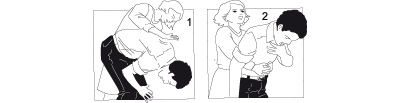
CHOCKING Obstruction of an airway by an object e.g. a toy or a piece of food is an emergency. WHAT TO DO If a conscious person cannot speak, cough or breathe:   Stand behind him and give several thumps with the hill of your hand between the shoulder blades. If this does not help, wrap your arms around the person’s waist just below the ribs. Make a fist with one hand and grasp it with the other hand. Press into the abdomen below the breastbone with a quick and forceful thrust

Read More

CONCUSSION

CONCUSSION Concussion results from a disturbance of the functioning of the brain following a knock on the head or jaw. Signs  Unconsciousness, sometimes only momentarily Pallor Cold clammy skin Shallow breathing Weak, but rapid pulse Nausea and vomiting Short-term memory loss There may be a delayed reaction, and symptoms may only appear later-usually within 24 hours. WHAT TO DO Urgent medical attention is needed. To avoid headaches which follow concussion, bed rest often for several days, is necessary.

Read More